
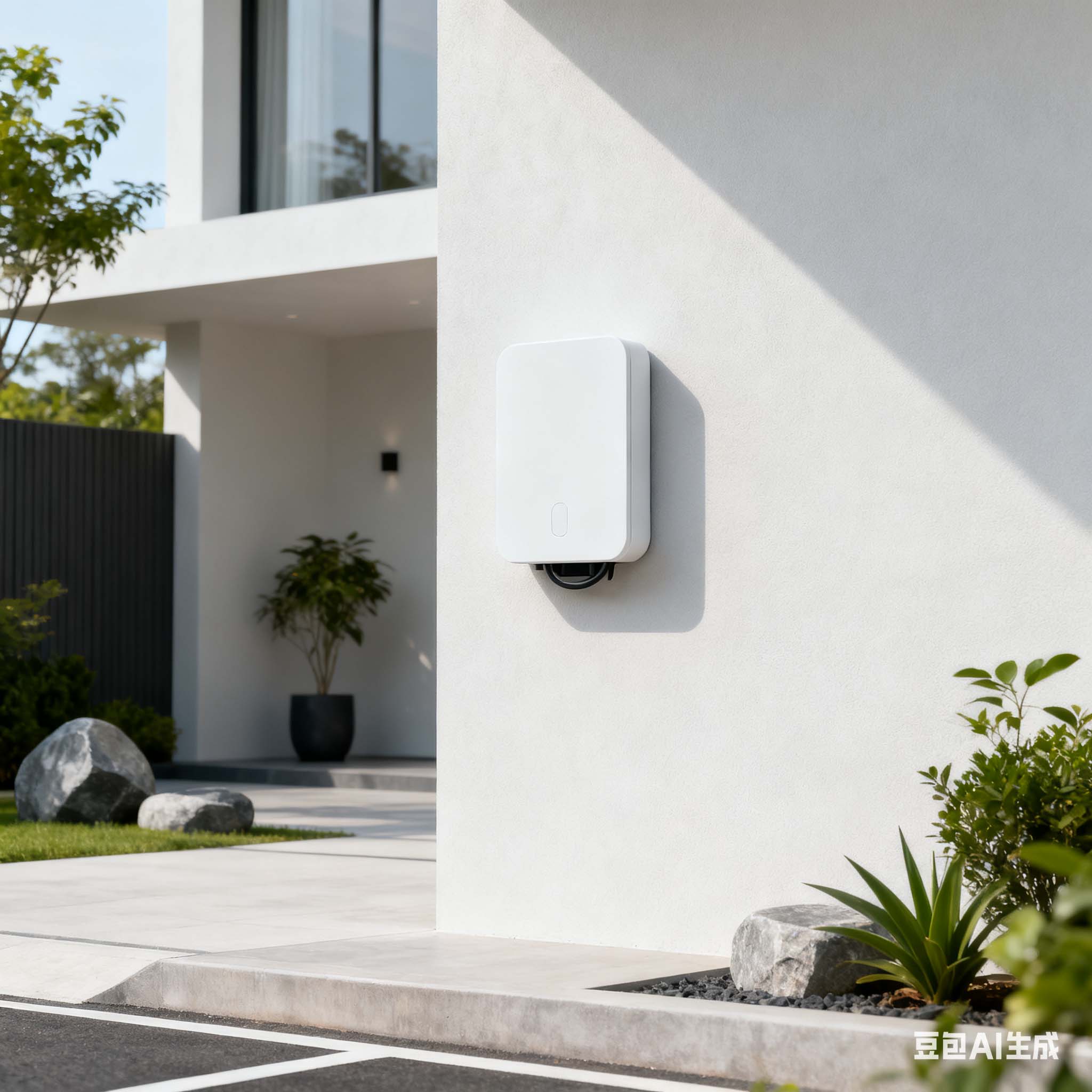
Whether a charger can legally ship, clear customs, or survive a tender’s compliance checklist depends on one thing: whether it has cleared the regulatory pathway of its target market. And those pathways diverge sharply. China, the EU, North America and Japan differ on enforcement model, connector type, voltage platform, communication protocol, metering and energy-efficiency rules — so a single hardware design rarely serves more than one region without modification. This guide covers off-board EV supply equipment (AC stations, DC chargers, portable units and IC-CPDs) and breaks the problem into four parts:
China: the four mandatory gates — GB safety standards, CCC certification, the new mandatory energy-efficiency standard, and legal metrology verification.
International: the IEC/ISO baseline, plus market-specific access rules for the EU, North America, Japan, Korea, Australia/NZ, Southeast Asia and the Middle East.
Comparison: one table showing how China, the EU, the US and Japan actually differ.
Pathways: the shortest compliance route for each go-to-market scenario, plus the mistakes that cost the most time.
[H2] 1. Scope: What Counts as “Off-Board” EV Supply Equipment
“Off-board” means the equipment is not installed on the vehicle — it sits on the grid side of the charging interface, as opposed to the on-board charger (OBC) inside the car. Under GB 39752—2024 and the IEC 61851 framework, off-board equipment covers three charging modes:
| Mode | Form factor | Typical product | Output range |
|---|---|---|---|
| Mode 2 | Portable | In-cable control and protection device (IC-CPD) | ≤ 1,000 V AC |
| Mode 3 | Fixed AC | Wallbox and pedestal AC charging stations | ≤ 1,000 V AC |
| Mode 4 | DC | Integral / split / mobile DC chargers | ≤ 1,500 V DC |
Two exclusions worth noting: battery-swap systems and wireless power transfer (WPT) are not covered by the current CCC scope in China. Vehicle-to-load / vehicle-to-grid discharging falls under a separate standard family (e.g. GB/T 18487.4).
[H2] 2. China: Standards Framework and Four Mandatory Gates
[H3] 2.1 China’s Standards Framework (Current as of 2026)
Mandatory national standards (GB) — the market-entry floor
| Standard | Title | Published / Effective | Role |
|---|---|---|---|
| GB 39752—2024 | Safety requirements for EV supply equipment | 2024-07-24 / 2025-08-01 | Safety elements and test methods for the equipment itself (replaces GB/T 39752—2021; first time issued as a mandatory GB) |
| GB 44263—2024 | Safety requirements for EV conductive charging systems | 2024-07-24 / 2025-08-01 | System-level safety plus interface, AC charging and DC charging safety |
| GB 46519—2025 | Minimum allowable values of energy efficiency and energy efficiency grades for EV supply equipment | 2025-10 / 2026-11-01 | China’s first mandatory energy-efficiency standard for charging infrastructure |
Recommended national standards (GB/T) — design and test basis
| Category | Standard | Title |
|---|---|---|
| System | GB/T 18487.1—2023 | Conductive charging system, Part 1: General requirements (effective 2024-04-01) |
| GB/T 18487.2—2026 | EMC requirements for off-board conductive supply equipment (effective 2026-11-01) | |
| GB/T 18487.4—2025 | Vehicle-to-load discharging requirements | |
| GB/T 18487.5—2024 | DC charging system for GB/T 20234.3 | |
| Connectors | GB/T 20234.1—2023 | Connection set, Part 1: General requirements |
| GB/T 20234.2—2015 | Connection set, Part 2: AC charging coupler | |
| GB/T 20234.3—2023 | Connection set, Part 3: DC charging coupler (current raised to 800 A, power to 800 kW; adds active cooling, temperature monitoring and thermal management) | |
| GB/T 20234.4—2023 | Connection set, Part 4: High-power DC charging coupler | |
| Communication | GB/T 27930—2023 / 27930.2—2024 | Digital communication between off-board charger and BMS |
| Interoperability | GB/T 34657.1—2025 | Interoperability test specification, Part 1: Supply equipment (effective 2026-03-01) |
| Sector standards | NB/T 33001 / 33002 | Technical conditions for DC chargers / AC charging stations |
| NB/T 11302—2023 | Information security for charging facilities and operating platforms |
[H3] 2.2 Gate 1 — CCC Certification (Mandatory from 1 August 2026)
In December 2024, China’s State Administration for Market Regulation (SAMR) issued Announcement No. 50 of 2024, adding EV supply equipment to the Compulsory Product Certification (CCC) catalogue — the single biggest market-access change for the industry.
| Milestone | Requirement |
|---|---|
| 1 March 2025 | Designated certification bodies begin accepting CCC applications |
| 1 August 2026 | Equipment without a CCC certificate and CCC mark may not be produced, sold, imported, or used in other business activities in China |
Scope:
AC EV supply equipment (code 2501) — rated output ≤ 1,000 V AC, supplying AC power to the vehicle’s on-board charger. Covers fixed AC charging stations and non-fixed AC equipment such as IC-CPDs.
DC EV supply equipment (code 2502) — rated output ≤ 1,500 V DC, supplying DC power to the rechargeable energy storage system. Covers integral, split, portable and mobile DC chargers.
Excluded: battery-swap equipment and wireless charging equipment.
Basis standards: GB 39752 and GB 44263. Certification rules: CNCA-C25-01:2024, with implementation rules CQC-C2501-2025. The announcement set a transition period of roughly 17 months and states that existing international certification results will be recognised wherever feasible, reducing cost and lead time.
What to do now: inventory every unit in stock, on sale and in operation; verify each CCC certificate; build a certificate register; and require a valid CCC certificate and mark before purchasing or installing any new equipment.
[H3] 2.3 Gate 2 — Mandatory Energy-Efficiency Standard (GB 46519—2025)
GB 46519—2025 is China’s first mandatory energy-efficiency standard for charging infrastructure. It takes effect on 1 November 2026 and applies to pedestal and wall-mounted chargers in public stations, commercial and office premises and residential areas. For an integral DC charging station:
Minimum allowable value (market-entry threshold): charging efficiency ≥ 94.5%, standby power ≤ 30 W.
Grade 1 efficiency: charging efficiency ≥ 96.5% — roughly 2 percentage points above Grade 3, saving about 1 kWh of loss per 50 kWh delivered.
Policy linkage: the NDRC/NEA Large-Scale Equipment Renewal Plan for Key Energy Sectors targets the phase-out and retrofit of all chargers rated 50 kW and below nationwide by the end of 2026. Transition arrangements for already-shipped units follow the latest regulator announcements.
[H3] 2.4 Gate 3 — Legal Metrology Verification (Trade-Settlement Chargers)
Charging energy is billed to consumers, which makes trade-settlement chargers regulated measuring instruments. Since 1 January 2023, trade-settlement chargers open to public use have been subject to mandatory verification:
| Regulation | Applies to | Verification items | Cycle |
|---|---|---|---|
| JJG 1148—2022 | AC charging stations | Appearance & function, working error, clock error | 3 years |
| JJG 1149—2022 | Off-board DC chargers | Same | 3 years |
Note: chargers used privately at home or internally within an organisation, not open to public trade settlement, are out of scope. Newly installed public chargers generally follow a “verify before use” rule.
[H2] 3. International Requirements: IEC/ISO Baseline and Market Access
[H3] 3.1 The IEC / ISO Baseline
International markets share a common technical foundation built on the IEC 61851 and IEC 62196 families:
| Standard | Scope |
|---|---|
| IEC 61851-1 | Conductive charging system — general requirements (current 2017 edition and amendments) |
| IEC 61851-21-2 | EMC requirements for off-board charging equipment |
| IEC 61851-23 | DC EV supply equipment (current 2023, Ed. 2) |
| IEC 61851-24 | Digital communication for DC charging control |
| IEC 62196-1 / -2 / -3 | Plugs, socket-outlets, vehicle connectors and vehicle inlets |
| ISO 15118 series | Vehicle-to-grid communication interface, enabling Plug & Charge and V2G |
| IEC 62477-1 / IEC 62368-1 | Power electronic converter safety / AV-ICT equipment safety |
| IEC 62443, ETSI EN 303 645 | Industrial cybersecurity and consumer IoT security baselines |
[H3] 3.2 European Union: CE Self-Declaration Plus AFIR
(a) CE marking — multiple directives apply
| Directive / Regulation | Number | Focus |
|---|---|---|
| Low Voltage Directive (LVD) | 2014/35/EU | Electrical safety — insulation, dielectric strength, earth continuity, leakage current |
| EMC Directive | 2014/30/EU | Conducted/radiated emissions and immunity |
| Radio Equipment Directive (RED) | 2014/53/EU | When Wi-Fi, cellular or Bluetooth is present |
| RoHS / WEEE | 2011/65/EU / 2012/19/EU | Hazardous substances and e-waste |
| General Product Safety Regulation (GPSR) | (EU) 2023/988 | General product safety |
Harmonised standards: EN IEC 61851-1, EN IEC 61851-21-2, EN IEC 61851-23, EN IEC 62196-2:2022, EN IEC 62196-3:2022 and others. Always check the current harmonised-standard references in the Official Journal — relying on a superseded edition creates a gap in your presumption of conformity. (b) AFIR — regulation for public charging operations The Alternative Fuels Infrastructure Regulation (EU) 2023/1804 has applied since 13 April 2024. It governs how public charging infrastructure is deployed and operated — it does not replace CE product compliance:
Availability target for the charging pool over a 12-month period.
Uptime reporting via OCPP at 5-minute granularity.
Ad-hoc payment without a subscription (contactless card payment at the dispenser).
Stations every 60 km along the TEN-T core network.
Interoperability: newly installed or renovated AC points must offer Type 2 (EN IEC 62196-2:2022) connectors or socket-outlets; DC follows CCS2.
(c) Other European requirements
Germany — Eichrecht (metrology law): billed energy must be measured by certified metering and be transparent and traceable, displayed in kWh. This is effectively mandatory for German public tenders.
United Kingdom: UKCA marking (technically aligned with CE, using BS EN standards). Smart charging requirements reference PAS 1878 / PAS 1879.
[H3] 3.3 North America: NRTL Listing + NEC + NEVI
North America has no CE-equivalent self-declaration route. Market access effectively requires third-party NRTL listing, enforced through state adoption of the National Electrical Code — NEC Article 625.5 requires listed equipment.
| Standard | Applies to |
|---|---|
| UL 2594 | AC EVSE (Level 1 / Level 2) — the primary safety standard |
| UL 2202 | DC EVSE (DC fast charging) |
| UL 2231-1 / -2 | Personnel protection systems (ground-fault monitoring and response) |
| UL 2251 | Plugs, receptacles and vehicle couplers (CCS1, NACS) |
| NEC NFPA 70 Article 625 | Installation — conductor sizing, protection, grounding, permitting and inspection |
| FCC Part 15 | EMC — unintentional and intentional radiators |
| SAE J1772 / J3068 / J3400 | Type 1 (incl. CCS1) / three-phase AC / NACS |
| ENERGY STAR, California CEC/CTEP | Efficiency labelling and state-level efficiency access |
NRTL marks (UL, ETL/Intertek, CSA) are what utilities, electrical inspectors and grant-funded programmes — including NEVI-funded highway corridors — actually check for. NEVI minimum technical standards for federally funded DC fast charging: ISO 15118 for Plug & Charge, OCPP 1.6J or later (OCPP 2.0.1 required from 2025), OCPI 2.2.1 for roaming, and at least one CCS Type 1 connector per DC port. Canada adds CSA C22.2 No. 280 and ISED EMC requirements.
[H3] 3.4 Japan: PSE + CHAdeMO
PSE (DENAN — Electrical Appliance and Material Safety Act): scope must be determined product by product. An AC Mode 3 charging station itself is generally not a listed PSE product, but associated cables and plugs may fall within scope and require the diamond PSE mark. Do not assume a product needs PSE merely because it is called a charger.
CHAdeMO: the technical and ecosystem gate for DC fast charging. Certification requires association membership, and Japanese government subsidies apply only to CHAdeMO-compliant installations.
JARI certification: an important third-party route for AC chargers, including factory audit and periodic surveillance.
Also relevant: JIS C 61851-1, JIS C 62368-1, JCS 4522 (flexible charging cable for high-power charging); products with wireless functions need MIC / TELEC (GITEKI) approval.
[H3] 3.5 South Korea: KC Safety + EMC/RF + Legal Metrology
KC Safety — testing against the KS C IEC 61851 series at accredited laboratories (KTL, KTC and others).
KC EMC and RF registration/certification — electromagnetic compatibility and radio functions (Wi-Fi, Bluetooth).
Legal metrology assessment — required for chargers with billing functions.
Efficiency — standby power and related parameters must meet KEMCO’s MEPS requirements.
[H3] 3.6 Other Markets at a Glance
| Market | Key access requirements |
|---|---|
| Australia / New Zealand | RCM mark (EESS electrical safety + ACMA EMC); AS/NZS 61851.1, AS/NZS 3000/3001.2; MEPS |
| Singapore | LTA type approval (based on TR 25, developed into the SS 722 framework) + equipment registration + licensed-electrician installation |
| Middle East | GCC certification (Saudi Arabia, UAE and others); Saudi SASO certification |
| Brazil | ABNT NBR IEC 61851; ANATEL for wireless functions; INMETRO currently imposes no mandatory certification on conductive charging systems, but local standards and installation rules must still be assessed |
| Thailand / Malaysia | TISI certification (TIS 61851-1); Malaysia requires SIRIM and Energy Commission approvals |
[H3] 3.7 Certification Bodies Commonly Used
China: CQC (China Quality Certification Centre), CVC, and others. International: TÜV Rheinland, TÜV SÜD, DEKRA, SGS, Bureau Veritas, Intertek (ETL), UL, CSA. These bodies act as Notified Bodies for CE and as NRTLs in North America, and their reports are widely accepted in tenders. In German, Middle Eastern and Southeast Asian procurement, a TÜV report carries commercial weight that a self-declared CE mark cannot — it transfers risk to an accredited third party.
[H2] 4. Regulatory Comparison: China vs. EU vs. North America vs. Japan
| Dimension | China | European Union | North America | Japan |
|---|---|---|---|---|
| Enforcement model | CCC certification + mandatory GB standards | CE self-declaration + directives/regulations | NRTL listing + NEC enforced by states | PSE + CHAdeMO (tied to subsidies) |
| Safety basis | GB 39752 / GB 44263 | EN IEC 61851 series | UL 2594 / UL 2202 / UL 2231 | JIS C 61851-1 / JIS C 62368-1 |
| Connectors | GB/T 20234 series | Type 2 (AC) + CCS2 (DC) | CCS1 (J1772 Combo) + NACS (J3400) | CHAdeMO + CCS1 |
| Voltage platform | ≤ 1,000 V AC / 1,500 V DC | As per IEC | UL framework (incl. 800 V platforms) | ≤ 1,500 V (permitted since 2024) |
| Communication | GB/T 27930 (BMS protocol) | ISO 15118 + OCPP | ISO 15118 + OCPP + OCPI (NEVI) | CHAdeMO CAN protocol |
| Mandatory efficiency | GB 46519—2025 (mandatory) | Ecodesign (ErP) + national rules | ENERGY STAR (voluntary); California mandatory | Programme / tender requirements |
| Metrology | JJG 1148 / 1149 mandatory verification | Germany’s Eichrecht, among others | State-level / programme requirements | Programme requirements |
| Operational rules | Local operating and safety-evaluation rules | AFIR (EU) 2023/1804 | NEVI minimum technical standards | Local siting and subsidy policy |
| Cybersecurity | NB/T 11302 | IEC 62443 / ETSI EN 303 645 | State-level and programme requirements | Programme requirements |
In one line: the EU is “one standard family, plus operating regulation on top”; North America is “third-party listing, plus installation code”; Japan is “standards, plus association scheme and subsidy conditionality”; and China is the only market stacking mandatory standards + mandatory certification + mandatory metrology verification — with 2025–2026 being its most intensive reform period.
[H2] 5. Compliance Pathways by Scenario
Scenario A — China domestic market only
Complete safety type testing against GB 39752—2024 and GB 44263—2024.
Apply for CCC certification, filing separately for AC (2501) and DC (2502).
Verify efficiency against GB 46519—2025 before 1 November 2026.
Schedule first mandatory verification under JJG 1148 / 1149 for trade-settlement units.
Scenario B — Export-led (EU / Middle East / Southeast Asia)
Design to the IEC 61851 + IEC 62196 baseline.
Build the CE technical file and Declaration of Conformity (LVD, EMC, RED, RoHS, WEEE).
Obtain third-party reports from TÜV, SGS or DEKRA to strengthen tender submissions.
Layer AFIR operating requirements onto public chargers (OCPP, ad-hoc payment, uptime reporting).
Prepare GCC / SASO in parallel for Middle East markets.
Scenario C — Dual market: China + Europe The connector and platform differences are the widest here. Use a dual-platform design (GB connectors plus Type 2/CCS2) and adapt the communication stack separately for GB/T 27930 and ISO 15118. Retrofitting a single hardware platform later typically invalidates existing certifications. Scenario D — North America NRTL listing (UL, ETL or CSA) is unavoidable. Decide early between CCS1 and NACS connector strategy, and plan from the outset for the ISO 15118 + OCPP + OCPI capability that NEVI-funded projects require.
Applies to all scenarios: run pre-compliance testing before formal submission. Industry data shows first-time pass rates below 60% for units submitted without pre-testing, with failures concentrated in EMC and environmental reliability.
[H2] 6. Common Misconceptions
“A CQC certificate means we’re compliant.” From 1 August 2026, CCC is the binding market-access credential in China. Voluntary CQC certificates must be converted using the published technical gap tables.
“The efficiency standard is voluntary.” GB 46519—2025 is mandatory. From 1 November 2026, non-compliant products cannot be produced, imported or sold.
“Home chargers need mandatory verification.” Mandatory verification applies only to trade-settlement chargers open to public use.
“CE marking is enough to sell public chargers in Europe.” CE covers the product; AFIR covers operations. You need both.
“The DC connector update was just a current increase.” GB/T 20234.3—2023 adds active cooling, temperature monitoring and thermal management — structural changes, not a rating tweak.
“Every charger in Japan needs PSE.” Scope is determined product by product; Mode 3 units are generally outside the listed scope.
[H2] 7. Frequently Asked Questions
Q1: When does mandatory certification start for off-board EV charging equipment in China? SAMR Announcement No. 50 of 2024 requires designated bodies to accept CCC applications from 1 March 2025. From 1 August 2026, equipment without a CCC certificate and mark may not be produced, sold, imported or used in other business activities in China. Q2: Which standards underpin CCC certification for AC and DC chargers? GB 39752 (Safety requirements for EV supply equipment) and GB 44263 (Safety requirements for EV conductive charging systems), under certification rules CNCA-C25-01:2024, applied separately to AC (2501) and DC (2502) categories. Q3: Is there a mandatory energy-efficiency standard for chargers? Yes. GB 46519—2025 takes effect on 1 November 2026. For an integral DC charger, the market-entry threshold is charging efficiency ≥ 94.5% and standby power ≤ 30 W, with Grade 1 requiring ≥ 96.5%. Q4: What certification is needed to export to the EU? CE compliance with the applicable directives (LVD, EMC, RED, RoHS, WEEE) using EN IEC 61851 and EN IEC 62196 harmonised standards. Public chargers must additionally meet the AFIR operating requirements under Regulation (EU) 2023/1804. Q5: What is required for the US market? In practice, NRTL listing to UL 2594 (AC), UL 2202 (DC), UL 2231 (personnel protection) and UL 2251 (connectors), plus NEC Article 625 compliance. Wireless functions require FCC Part 15. NEVI-funded projects additionally require ISO 15118, OCPP and OCPI capability. Q6: Do IC-CPDs need certification? Yes. IC-CPDs are classified as non-fixed AC EV supply equipment and fall within CCC category 2501.
[H2] [CTA Block]
Not sure which compliance route your product needs? We deliver end-to-end support — standard interpretation, pre-compliance testing, type testing and certification to CCC, CE, UL and TÜV — covering AC stations, DC chargers, portable units and IC-CPDs.
📄 Free compliance assessment — send your datasheet, receive a market-access roadmap within one business day
🧪 Pre-compliance testing — de-risk EMC and safety before formal submission
🌍 Global market access — China, EU, US, Japan, Korea, Australia/NZ and the Middle East planned together